I retired in April 2013 after 25 years as a librarian at the British Library specialising in inventions. This included running numerous workshops; writing books on inventions and a work blog; carrying out searches for clients; and one-to-one meetings with inventors. [more]

[ABOUT ME] [CONSULTANCY WORK] [FAVOURITE LINKS] [BOOKS] [CONTACT]

30 August 2013

Happy birthday, lava lamp

The BBC has a story on the 50th anniversary of the famous lava lamp. It is called Lava lamp creators mark 50 years of 1960s icon.The 50 refers to the 1963 date of setting up the original company.

I enjoyed it, and am providing links here to the two key patents.

In 1964 Crestworth Limited applied for what was published as the patent called Display device. Below is the main drawing.

However, there were four problems with this first model. This was explained in a second patent, filed in 1967 by Edward Walker, the former RAF officer who thought up the idea in the first place.

This was also called Display device. The first problem was that as it took a long time for the device to become ready when switched on, "It has now been found that some viewers may become impatient during the preliminary heating up period." The second was that if left on for a long time, overheating caused the globules to break up into "unattractive tiny droplets". The third was that the apparatus could freeze and therefore break in cold periods. The fourth was that draughts could cause problems, requiring careful positioning of the lamp.

All these problems were solved by adding something to the fluid. A "water-miscible liquid.".

Anti-freeze, in other words.

20 August 2013

The Blaze Light for bicycles

The James Dyson Awards will be announced on the 12 September (national winners) with the shortlist on the 10 October.

One of the applicants is the Blaze Light for bicycles. It is a lighting innovation for cyclists. During my career at the British Library I met numerous inventors who had ideas related to bicycles. Many were for promoting safety at night, usually either enhancing visibility or for indicating turns, and I quickly realised that there was lots of prior art out there. I remember, shortly before I retired, two very secretive inventors who insisted that I sign a non-disclosure agreement, only for me than to explain that their idea was very well known. They had spent six months developing the idea without spending half an hour doing even a simple look through the patents.

The inventor is Emily Brooke of Bath, Somerset. Her Light projection safety device for a two wheeled vehicle was granted a British patent in April 2013. The main drawing is shown below.


First page clipping of GB2490889 (B)
An image of a bicycle is projected in front of the cyclist by an LED. The idea is
that heavy vehicle drivers, in particular, are more likely to notice the cyclist.

The video on the Dyson website starts by welcoming Kickstarter, the
crowdfunding site, and with that hint I found that the project had been funded with
£55,000 by 782 backers. More power to crowdfunding ! I wish the concept had
started sooner as good ideas find it much easier to get funding than with banks or
venture capitalists.

According to the British patent, Brooke acted as her own patent attorney. I would
not advise that, as it is so easy to get things wrong. The claims on the final page, I would suggest, are unhelpfully restrictive ("broad yet precise", was what a patent attorney once said to me was the ideal).
The Patlib libraries can be asked for free and helpful advice for innovative businesses and inventors.

2 July 2013

Apple's watch invention

The TechCrunch website has just announced that Apple has had a US patent granted for a disappearing bezel for an electronic watch to enable a bigger screen to be visible. Published today, it's US 8447114.

The problem with putting screens on tiny devices is that it's hard to see anything. Any ability to enlarge the screen is highly beneficial for the user -- and for those who wish to communicate with them.

But what do you call it ? In December 2012 Apple applied for the Taiwan trade mark iWatch in Class 9, which includes software, as quoted in an article on the MacRumors website.

If they want a US trade mark for that trade mark, the problem is that in August 2012 OMG Electronics applied for that trade mark with 85703706 in Class 9 -- but failed, inexplicably, to say it was for watches as well as various listed devices.

Earlier still, in July 2007 Platinum International Holdings applied for 77236688 for iWatch, again in Class 9, but mentioned "cell phones watch". This has not yet been registered, which is odd after six years.

This could be important, as listing goods is sometimes vital when the identical trade mark co-exists in the same class, on the grounds that they can't be confused. The earliest company to file gets the trade mark. You can quote a "priority", when you first filed it within 6 months in another country, to get an earlier filing date.

Forbes Magazine has an article on the subject which cites the Taiwan data.

21 May 2013

The Google Glass patents

I t's been fun having a look for the patents associated with Google Glass, the spectacles that enable its wearers to interact with the Web and, above all, to see projections of information.

Google Glass itself is the subject of a US trade mark application which, oddly enough, was published 18 June 2013 for opposition -- several weeks in the future, as I write.

The key term seems to be "wearable" although it is possible that some new technology involved does not depend on a wearable frame and therefore may be hard to find.

There are seven US Design patents for the look of variant models, all with the title "Wearable display device" (although one adds the word "frame", and one "section").

An article on the CNET website, published 21 February, suggests that US20130044042A, is highly relevant. The article is called Google Glass patent application gets really technical. I prefer to link to the corresponding World patent application, Wearable device with input and output structures. One of its drawings is given below.


However, three other patent applications were published in March or April and there are in all eight World patent applications by Google containing the word "Wearable".

None of these have been granted rights as B documents. One advantage of using the World documents rather than the corresponding US applications (listed here) is that search reports listing prior art found by patent office officials is often available.

These are either on A1 documents (at the end) or in separate A3 documents. The USA only publishes search reports on its granted patents, where a brief summary is given on the front page.

[24 May -- the New Yorker website has an interesting article on forerunners, Glass before Google, which links to a copy of a patent by Morton Heilig, applied for in 1957]

[7 Dec -- see my article Google surging ahead with patenting for update on wearable technology]

20 May 2013

Photographs of strange inventions

The Netherlands' Nationaal Archief has a collection of photographs of strange inventions, which can be seen at the Brain Pickings website in the page 27 of history's strangest inventions by Maria Popova.

Some of them, at least, seem to have been patented, and it would be fun to try to identify them...

15 May 2013

Frank Hornby's inventions

I see that today marks the 150th anniversary of Frank Hornby's birthday. He was the originator of Meccano and also Hornby trains. Google has honoured him by using imagery from his products on today's page.

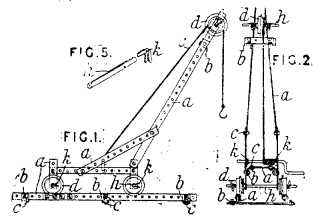
12 British patents by Frank Hornby are listed on the free Espacenet database. The earliest of these is that for Meccano itself, Improvements in toy or educational devices for children or young people, with its drawings page shown below.

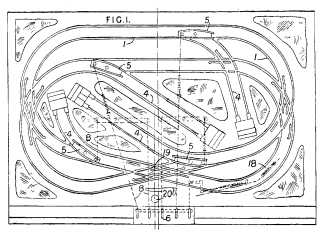
A curious one which involves running trains on circuits is An improved toy or game.


9 May 2013

Paint can as a camera invention

I was recently at the National Maritime Museum and saw in the shop a paint can that had been modified into a pinhole camera. Here it is -- with the patent number given near the bottom as (American) patent 6618556.


The patent's title is Chemically resistant pinhole camera. It is an ingenious example of recycling, and it works
by as the patent summary explains "The inner surface of the camera is coated with a chemically resistant light absorbing material such as a black epoxy paint. The inner surface also forms a curved image plane to support the photographic material."

Below is the main drawing for it.


I love it when apparently simple new products have patent numbers on them, so that people can learn how they work.. in this case, with 18 pages of information.

There is a website for those who want to buy one.

2 May 2013

Squirrel-proof birdfeeders

I've just watched a 2011 episode of Dragons' Den with Julian Lipton pitching for money for a squirrel-proof birdfeeder.

I normally expect to see new products or services on the show, but the particular variation involved had been invented nearly twenty years ago by his father. I was delighted to see the featured product, as it is a concept which I use a lot when I run workshops on searching for patents, as the concepts are easy enough for everyone to understand, and why it's a good idea.

The main drawing from the patent application is shown below. The original World patent application by Leslie Lipton, Food dispensers for birds, gives details of how it works.

First page clipping of WO9418824 (A1)
The basic idea is that the squirrels are kept away from the food by the big bars on the exterior, while small birds can slip through the bars.

The official entry states that the British patent, GB2275408B, is no longer in force as it has run its term of 20 years from the filing date and so anyone can use the invention.

The concept is a good example of how patent classification works. The invention was classified as A01K39/0113 in the Cooperative Patent Classification (CPC) and 372 patent specifications are listed for that class on the free Espacenet database. It can be amusing to look through them -- some have great drawings -- and to contemplate the various strategies used. Most involve using the squirrels' weight, or their lack of flying ability to try to outwit them.

So what happened ? Julian failed to secure any finance as the patent was shortly going to expire, and the dragons like monopolies. Also, the company was making losses.

The company website is The Nuttery.

1 May 2013

Technology and fitting clothes

Technology is advancing into more and more spheres of life, and making sure your clothes fit is no exception.

The BBC website has published a story, Fear of fitting rooms, about an invention by Dr Nadia Shouraboura. She had found the experience of trying clothes on slow and exasperating, and of course wanted to do something about it. She had a useful background -- she was the former head of supply chain and fulfillment technologies for Amazon.

So she created Hointer, a concept store in Seattle, initially aiming it at men. The clothes are on simple rails. You tap the ones you want with your smartphone, if it has Near Field Communication, or else scan a QR code. A fitting room is allocated to you and when you go there the clothes are waiting for you.

So goes the BBC story (with more details of course). Dr Shouraboura's name was easy to check for and I found a US patent by her, with the main drawing shown below.

Six inventors are credited with Placement of inventory in a materials handling facility. Amazon Technologies, Inc. is the applicant. It's certainly a very technical patent in its wording. I haven't looked through it in detail, but it occurred to me that it would be very useful if someone looking for a particular size and perhaps colour, particularly for say trousers where two sizes are needed (waist and leg), could present their needs and in some way the right clothes would be flagged up when scanned by the phone.

6 April 2013

Inventors and their myths

OK, I'm not an inventor. But I've had lots of dealings with them -- face to face, on the phone, e-mails, you name it -- where I was offering advice or, more often, listening to their statements.

With a few exceptions I omit trained engineers from these comments. Again and again, I heard from people who had no skills or experience at all comments like (these are all real):

-- I will make at least £700 million from this (if it's that lucrative a product, competition will spring up
-- My friends all say that they would pay £30 for it (well, they would say it, or they're not friends)
-- I've committed too much to stop now, it's my dream (this is a fallacy, thinking that yet more money and time will retrieve a bad situation)
-- Do I need a business plan if I want financial backers (yes, and a good one too !)

Again and again people who only have an idea and have nothing else going for them, such as, oh, a knowledge of the sector, marketing, finance, engineering... think that they will have no problems competing with veterans in the area. Someone exceptionally able may be able to win through, but most people should try applying a SWOT analysis to themselves and the product niche.

For a start the product niche itself is very often tiny and overcrowded. They may be hoping to sell an idea which will mean tearing up assembly lines for a tiny advantage, and are amazed at the thought that they won't, perhaps, be welcomed.

Or they are unable to see what the person on the other side of the table -- the negotiator -- might think.

I have been called negative, but I think that the real word is realistic. Advising inventors about the basics of IP and about what issues ought to be in their business plan was fun, but particularly if the idea was a good one with a good chance of success with the inventor and his or her team having strong talents and experience. Lacking that doesn't make it impossible to succeed, but it's a lot harder.

It's far more work and risky getting an inventor through to success than most novices ever dream.